In the world of SaaS, we often live in two different, disconnected universes.
Universe A: The Customer Success (CS) platform. This is where the business data lives: ARR, renewal dates, contract terms, and high-level health scores. It’s the “Executive” view of the account. It tells you who is paying you and how much.
Universe B: The Product Experience (PX) platform. This is where the actual users live: clicks, heatmaps, friction points, and feature drop-offs. It’s the “Reality” view of the product. It tells you what they are actually doing every day.
Most teams try to bridge these two universes with manual spreadsheets, weekly “sync” meetings, and “gut feelings.” But when you integrate Gainsight CS and PX, you stop guessing. You start orchestrating a unified customer journey that spans from the boardroom to the browser.
The Problem: The “Watermelon” Effect
We’ve all seen the Watermelon Account: It looks bright green on the outside, but it’s deep red on the inside.
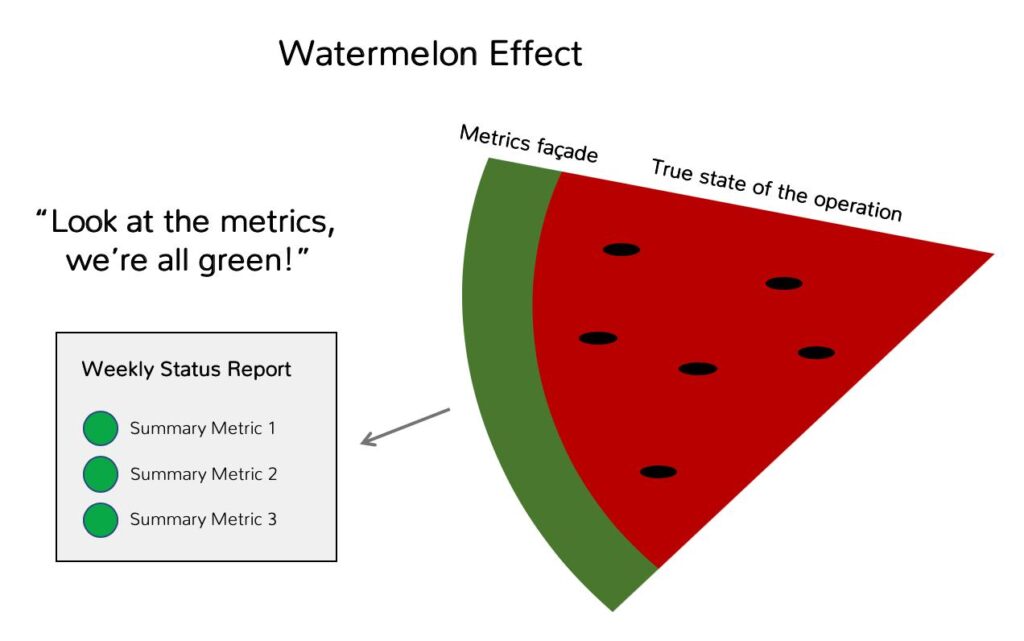
From the CS platform view, the data looks great; the customer just renewed, they pay their invoices on time, and the VP seemed happy during the last executive dinner. But inside the product (the PX view), the end-users are drowning. They can’t find the “Export” button. They are clicking into the “Help” section five times a day. They are attempting to use a feature and abandoning it halfway through.
Without PX data, your CS team is flying blind. They see the business success but miss the user failure. By the time the user frustration reaches the executive’s desk and turns into a “Red” account in the CS platform, it’s far too late to fix the sentiment. The “Watermelon” has finally cracked.
S Cubes in Action: Catching the Watermelon Before It Cracks
One of the recurring patterns we see when implementing Gainsight for mid-market A SaaS client is an account that looks perfectly healthy on paper right up until the renewal call goes badly. In one such engagement, a project-management SaaS client had an enterprise account showing a “healthy” CS score, on-time payments, an engaged exec sponsor, and no open support escalations. Once we wired PX usage data into the same health score, a different picture emerged: daily active usage among licensed seats had quietly dropped by roughly a third over two quarters, concentrated entirely in one sponsor and unit that had lost its internal champion. The CSM had no visibility into that drop because it never showed up as a support ticket or a CS platform signal; it only existed in the product logs. Flagging it early turned what would have been a surprise down-sell into a proactive re-onboarding conversation with the affected team, months before the renewal date.
The Solution: A Single Source of Truth
Integrating Gainsight PX into Gainsight CS creates a “closed loop” system. It allows your team to see the “Who” (the business context) and the “How” (the product behavior) at the exact same time. It turns your CSMs from “account managers” into “behavioral scientists.”
Here are the four strategic pillars of why this integration is a non-negotiable for high-growth teams in 2026:
1. Proactive Retention (The Early Warning System)
Most CS health scores are lagging indicators. They tell you when a customer has already stopped using the tool. Integration turns these into leading indicators by analyzing behavior before it becomes a trend.
2. Precision Expansion (The Growth Engine)
The best time to ask for an upsell isn’t at the scheduled Quarterly Business Review (QBR). It’s the moment a customer hits their usage limit or masters a core feature.
When CS and PX talk to each other:
S Cubes in Action: Turning Usage Signals Into Expansion Revenue
For a B2B fintech client running Gainsight alongside a usage-metered product, the CS team’s expansion motion had historically relied on the CSM noticing high usage manually during QBR prep, inconsistent and easy to miss between quarterly touchpoints. After integrating PX-driven intent signals directly into the CS workflow (flagging accounts that repeatedly hit plan limits or clicked into gated features), the team moved from a purely calendar-driven expansion motion to a signal-driven one: CSMs were prompted to reach out the same week an account showed expansion-ready behavior instead of waiting for the next scheduled check-in. The qualitative shift the client reported was as important as the pipeline lift expansion conversations that started from “we noticed your team is already outgrowing your current plan,” not a generic upsell pitch.
.
3. The Scalable Onboarding (Time to Value)
Traditional onboarding is “human-heavy.” It requires endless calls, slide decks, and manual hand-holding. In a high-volume SaaS model, this simply doesn’t scale. With Gainsight PX, you can automate the “low-value” training through intelligent in-app guides, freeing your CSMs for high-value strategy.
4. Bridging the Gap Between Product and CS
The biggest friction in SaaS is often the “information gap” between the product team and the customer success team.
With the Gainsight integration, CS teams can finally provide evidence-based feedback. They can show exactly where users are dropping off in a funnel, which features are gathering dust despite the marketing hype, and which UI changes are causing support tickets to spike. This turns the CS team into a strategic partner for the Product Roadmap, ensuring the engineers are building what the customers actually
Why This Matters: Efficiency is the New Growth
In the current economic climate, the “growth at all costs” model is dead. You cannot simply hire more CSMs to solve a churn problem. You have to automate the visibility and act on the data you already have.
The Strategic Shift: We are moving from “Account Management” to “Product-Led Success.” When your CS team knows exactly what is happening inside the product, they move from being “Support with a Quota” to being “Strategic Advisors.” They aren’t asking “How is it going?”; they are saying “I noticed you’re struggling with X, here is how to solve it.”
The Bottom Line? Gainsight CS is the “What” (The Business). Gainsight PX is the “Why” (The User). Separately, they are useful tools. Together, they are an untouchable competitive advantage.